
‘I feel something so right doing the wrong thing’: Scam worker brainwashed by pop songs, threats
SINGAPORE – A sea of voices chanting, “I feel something so right doing the wrong thing” from the song Counting Stars by American band OneRepublic still haunts Mark (not his real name).
They were not concertgoers, but a crowd of workers in a scam centre in Dubai, the United Arab Emirates, forced to belt out the song daily.
The tune was a form of psychological manipulation to justify their criminal activity, said Mark, 31, a Myanmar national who was trafficked there in March 2022 via a fraudulent job offer.
He and other workers, from countries like Myanmar, China, and Indonesia, were coerced into scamming victims by luring them into online relationships and convincing them to plonk their savings into fake investment platforms.
Mark shared his story anonymously at the Global Anti-Scam Summit Asia, held in Singapore in September 2025. He spoke to The Straits Times in December.
He said the workers had to assemble daily in front of a screen on which lyrics were projected.
They were also made to sing the hit song, My Love, by Westlife every morning – “An empty street, an empty house / A hole inside my heart” – to understand the loneliness felt by potential scam victims.
Said Mark: “I actually get PTSD (post-traumatic stress disorder) when I hear these songs.”
In 2022, Mark had just lost his job as a property sales consultant based in Bangkok, Thailand, when his brother told him about a Facebook job ad for a forex trading platform marketer in Dubai.

Mark completed a typing test and an online interview, and received an offer letter. The company also promised to pay for his flight, visa and accommodation.


He met the woman who had posted the ad. Over coffee in Myanmar, she claimed her daughter was working there and urged him to not miss the opportunity.
But at the company’s dormitory in Dubai, he became suspicious when staff took his passport, claiming they needed it to process his work visa.
Media reports have, in recent years, highlighted the plight of scam workers, amid growing international pressure to eradicate these compounds.
Despite increased global efforts, such as the capture of several high-profile scam kingpins and crackdowns on scam hubs in South-east Asia, experts said the problem persists.
Ms Asha Hemrajani, senior fellow at the S. Rajaratnam School of International Studies at Nanyang Technological University, said scam operations are evolving.
She said that instead of large-scale compounds, some scammers now run smaller centres, making these harder to detect as they are less visible even with satellite imagery.
A United Nations human rights agency report in February said there are at least 300,000 people from 66 countries forced to work in scam centres worldwide. The industry is reportedly responsible for an estimated US$64 billion (S$81.4 billion) in annual global scam profits.
The report noted that scam operations have spread to some Pacific Island countries and even to West Africa, while operations in South-east Asia are still well-resourced.
Ms Hemrajani said: “It’s like a game of Whac-A-Mole. You kill one, 10 more show up from somewhere else.”
Singapore is not immune to the scourge.
Since 2022, nine Singaporeans who might have been exploited in overseas scam centres have been offered consular assistance by the Government.
In October 2025, the police issued warrants of arrest against 27 Singaporeans and seven Malaysians allegedly involved in a Singaporean-led scam ring operating in Cambodia.
That same month, a Singapore company that recruited job seekers for a scam-linked Cambodian resort was investigated.
Global Anti-Scam Alliance’s Asia-Pacific director Brian Hanley said recruitment and coordination for scam operations can happen anywhere, including in highly developed economies with rigorous law enforcement.
“No country is immune, (and) strong domestic systems in Singapore don’t fully shield against transnational crime,” said Mr Hanley.
Mark realised he was in a scam centre when he and other workers were made to role-play as women in romantic conversations.

A 2023 report by Filipino online news site Rappler later revealed that the company, known as the Colorful and Leap Group, ran scam operations in Dubai and the Philippines.
Workers were told that every mistake would cost them a percentage of their pay. Going to the toilet for more than two minutes took 2 per cent off, while not meeting quotas for three consecutive months meant no pay at all. He was promised a monthly salary of US$1,200.

“I had no choice because I needed to provide for my family,” said Mark, who was the sole breadwinner.
The business graduate woke up at 4.30am daily, took a 20-minute bus ride to the office and clocked in before 6am for the mass singalong.
The workers had to scream to work up their adrenaline every day. They created fake dating app profiles and used these to chat with hundreds of victims as loud music blared from speakers.
There was a particular month when Mark’s team targeted Singaporeans, as his supervisor believed they were easier to get money out of, given their familiarity with cryptocurrency.

One of his teammates fleeced a Singaporean man of about US$100,000.


Though Mark did not dupe any Singaporeans, he scammed an American construction worker who refinanced his home, took loans and sold his car to invest in the sham. The man lost about US$40,000.
Mark said he cried while scamming these victims. “I knew that once I successfully made these transactions, I would become a scammer. I’m not proud of it.”
Six months later, Mark was transferred to the syndicate’s Philippine branch at Sun Valley Hub, Pampanga, a province north-west of Manila.
That scam hub had armed guards atop towering fences lined with barbed wire.

An Indonesian worker who tried to escape was caught by the guards, assaulted and put in solitary confinement in a small cell.
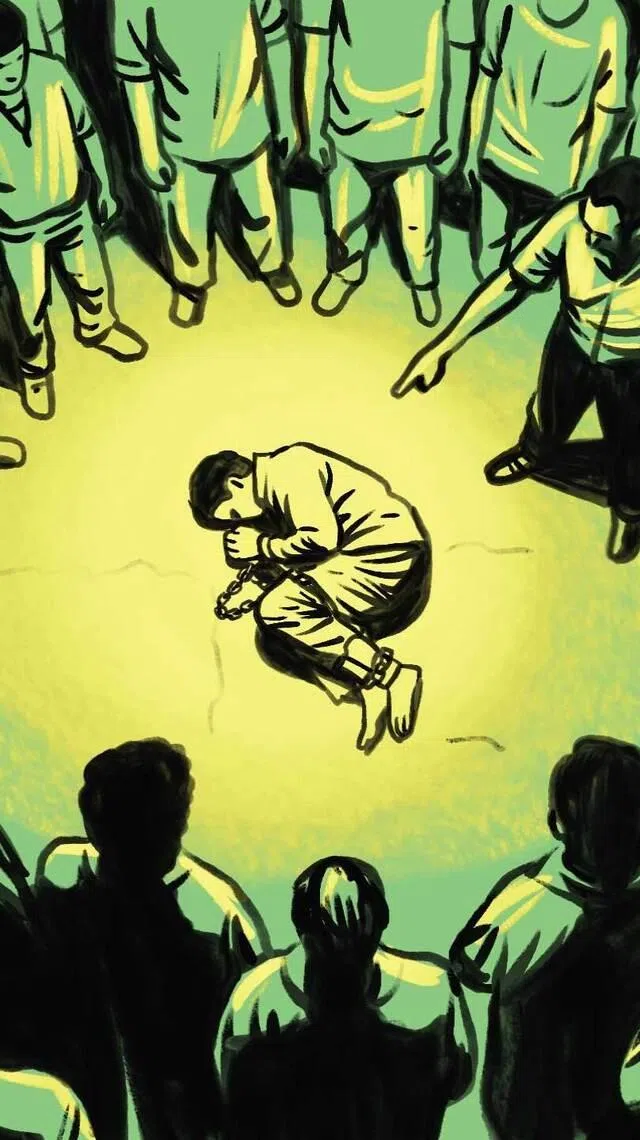
Their supervisors made everyone gather around the chained and bruised man, and threatened would-be escapees with the same fate.
The International Justice Mission (IJM), an anti-trafficking non-governmental organisation, had heard about workers being electrocuted, beaten up and starved, said its vice-president for programme impact in Asia-Pacific, Mr Andrey Sawchenko.
“People are thinking this is a life-or-death situation. That’s why we have seen people so desperate to get out,” said Mr Sawchenko, adding that some victims jump out of windows or cars to escape.
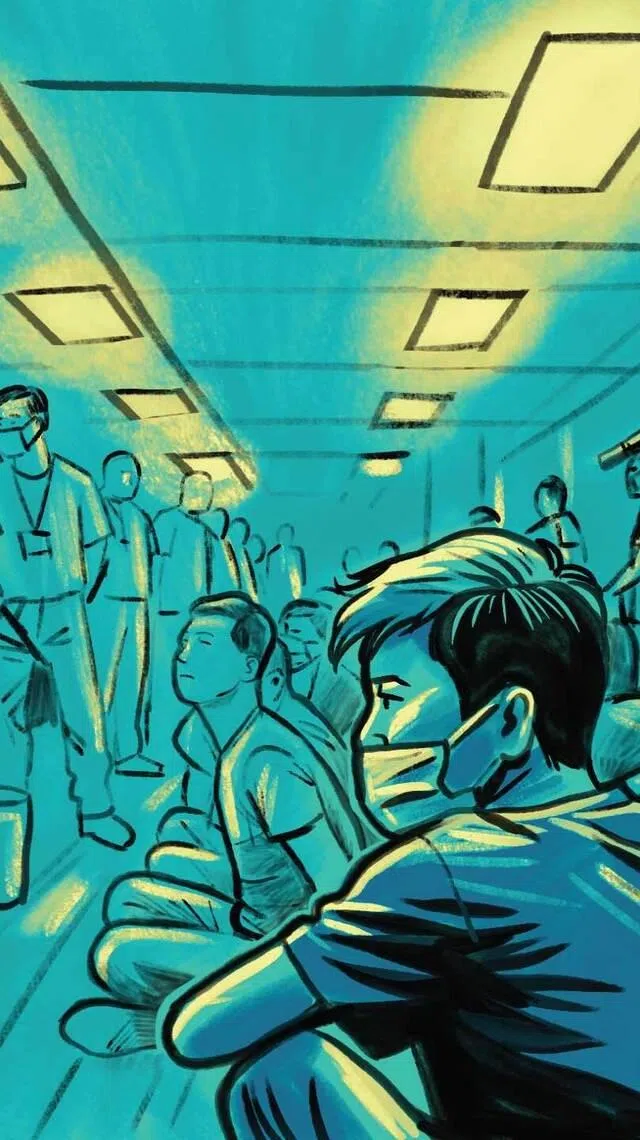
Mark was rescued when the Philippine police raided the scam hub in May 2023, where they found more than 1,000 workers, after a tip-off from the Indonesian embassy.
He spent months in the Philippines identifying the syndicate’s supervisors and testified in court against its managers.

Ms Hemrajani said there is a misconception that only the uneducated and poor are trafficked into working at scam centres.
She warned that educated people are also susceptible, especially when scam recruiters post ads on trusted job search sites, which add a veneer of legitimacy.
Mr Sawchenko said even after being freed from scam centres, some workers can be charged over fraud or immigration crimes if they are not formally identified as a victim.
IJM supports their victim identification process, and provides them with legal support and psychological care.
Mark asked to be repatriated to Thailand and reunited with his family there.
He co-founded a group, the United Resilience Network, which advocates systemic change to prevent human trafficking.
But he still feels guilty over his victims and shared his story to make it up to them.

He said: “It made me feel better. I feel like I did the right thing.”
Illustrations by: Chng Choon Hiong
Produced by: Christine Tan, Chng Choon Hiong, Sharon Loh, Denise Chong, Stephanie Yeow
